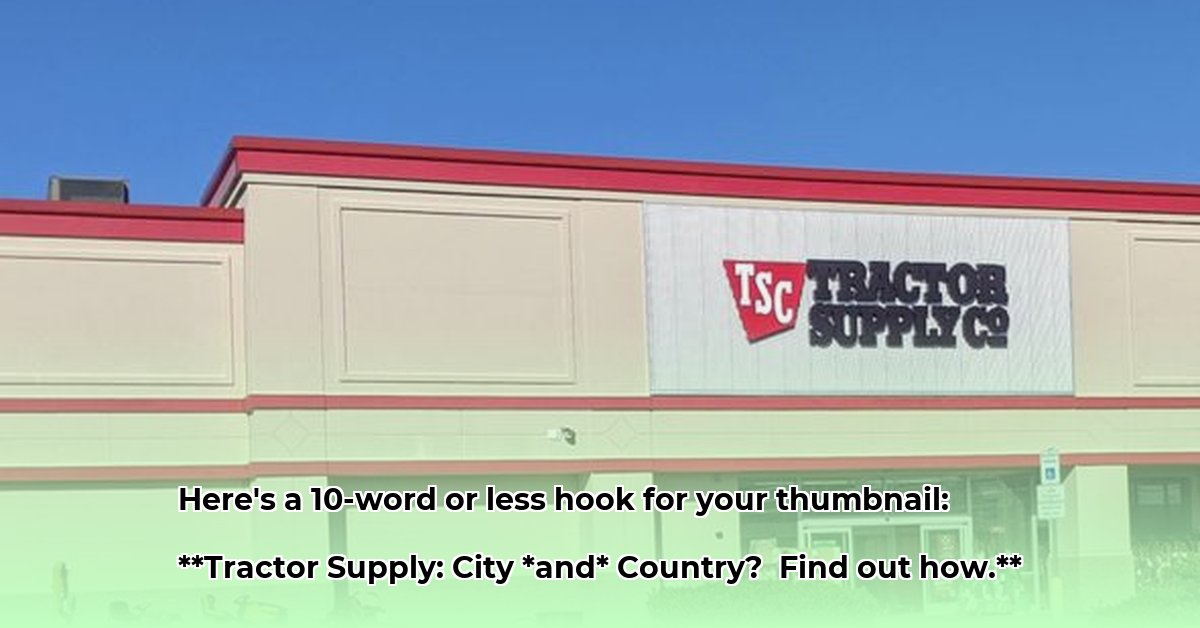
A Hybrid Retail Model Thriving in a Blended Community
Creswell, Oregon, presents a unique retail challenge: a community seamlessly blending rural agricultural traditions with a burgeoning urban population. This dynamic context provides the perfect backdrop for a case study of Creswell Tractor Supply (CTS), a Tractor Supply Company (TSC) store successfully navigating the evolving needs of a diverse customer base. How does CTS cater to both seasoned farmers and weekend gardeners, and what lessons can other retailers learn from their success? For more information on Tractor Supply Company, check out their gift cards.
Diverse Customer Base: A Strength, Not a Challenge
CTS's customer base is its defining characteristic. Instead of focusing on a singular demographic, CTS embraces the blend of rural and urban lifestyles present in Creswell. This is evident in the diverse clientele, ranging from ranchers purchasing hay bales to city dwellers seeking lawnmowers and organic seeds for their balcony gardens. This diverse clientele directly impacts inventory strategy, staff training, and overall business model. How effectively does CTS cater to this diverse market?
Strategic Product Selection: Catering to Multiple Needs
The success of CTS's hybrid model hinges on its diverse product range. The store strategically stocks items appealing to both rural and urban customers. This includes traditional agricultural supplies like animal feed and heavy machinery, complemented by a range of products for urban gardeners, including organic seeds, gardening tools, and even pet supplies. This broadened product range appears to increase profitability and customer loyalty, creating a sustainable business model. Does this approach optimize profit margins compared to a more specialized model?
Location and Accessibility: A Regional Hub
CTS's strategic location near Dexter, Pleasant Hill, and Eugene significantly enhances its market reach. Its accessibility to a wider customer base translates into increased sales and customer loyalty, transforming it into a regional hub, not just a local store. This crucial element of CTS's success showcases the powerful impact of strategic planning and location analysis on overall business performance. Has the location been a key factor in outperforming other TSC locations with less diverse customer bases?
Value of Knowledgeable Staff: Beyond Transactions
CTS prioritizes staff expertise, leveraging knowledgeable employees to provide personalized customer service. Employees aren't merely cashiers but informed advisors guiding customers toward the appropriate products for their needs, fostering customer loyalty and building a strong brand reputation. This level of service creates a competitive advantage over businesses solely focused on low pricing. Does this personalized approach justify the investment in staff training and higher labor costs?
Navigating Challenges: Adaptability and Forecasting
While the CTS model demonstrates success, certain challenges remain. Maintaining optimal stock levels, especially for seasonal items, requires careful forecasting and responsive adjustments. Fluctuations in agricultural demands and weather patterns necessitate a dynamic inventory management strategy. Furthermore, consistent monitoring of market trends and competitor pricing remains crucial for maintaining a competitive edge. How accurately does CTS predict seasonal demand and adjust accordingly?
Growth and Future Plans: A Roadmap for Success
CTS's short-term and long-term goals, aligned with the objectives of its key stakeholders (local farmers, residents, and TSC corporate), reflect an interconnected approach to business growth.
| Stakeholder | Short-Term Goals (0-1 year) | Long-Term Goals (3-5 years) |
|---|---|---|
| Creswell Tractor Supply | Improve inventory management; enhance staff training; implement regular customer feedback surveys. | Expand product lines based on customer feedback; launch a loyalty program; investigate online sales. |
| Local Farmers | Access to expertise and resources; cost-benefit analysis of CTS products vs. competitors. | Negotiate bulk purchase discounts; collaborate with CTS on environmentally friendly products. |
| Local Residents | Convenient access to gardening, pet, and lawn care supplies. | Continued patronage of CTS; participation in community gardening projects facilitated by CTS. |
| TSC Corporate | Monitoring store performance; refinement of targeted marketing strategies; sales data analysis. | Streamline the supply chain; use data analytics for deeper customer insight. |
This table highlights how a cohesive strategy, focused on continuous improvement and stakeholder engagement, underpins CTS's plan for future growth.
A Model for the Future?
Creswell Tractor Supply’s success rests on several pillars: meeting the diverse needs of a blended community, providing expert customer service, and strategic location. However, sustaining this success requires continuous adaptation. Further research into customer behavior and agile inventory management techniques will be crucial for CTS's continued growth and profitability. It presents a compelling model for other retailers looking to similarly cater to diverse customer needs in evolving communities. What are the key measurable indicators that will determine the success of CTS's long-term growth strategy?